
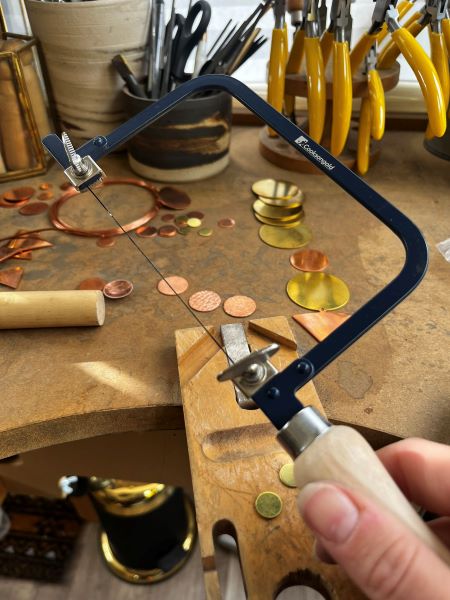
A jeweller’s saw is one of the most important tools on the bench. Used for cutting sheet metal, creating decorative pierced designs and shaping components before assembly, it offers a level of accuracy that few other hand tools can match.
Selecting the correct saw blade is just as important as developing good sawing technique. The right blade will help you achieve cleaner cuts, reduce breakages and make piercing work more enjoyable. In this guide, we’ll explain how jeweller’s saw blades are sized, how to choose the right blade for your project and how to get the best results from your saw frame and blades.
What is Saw Piercing?
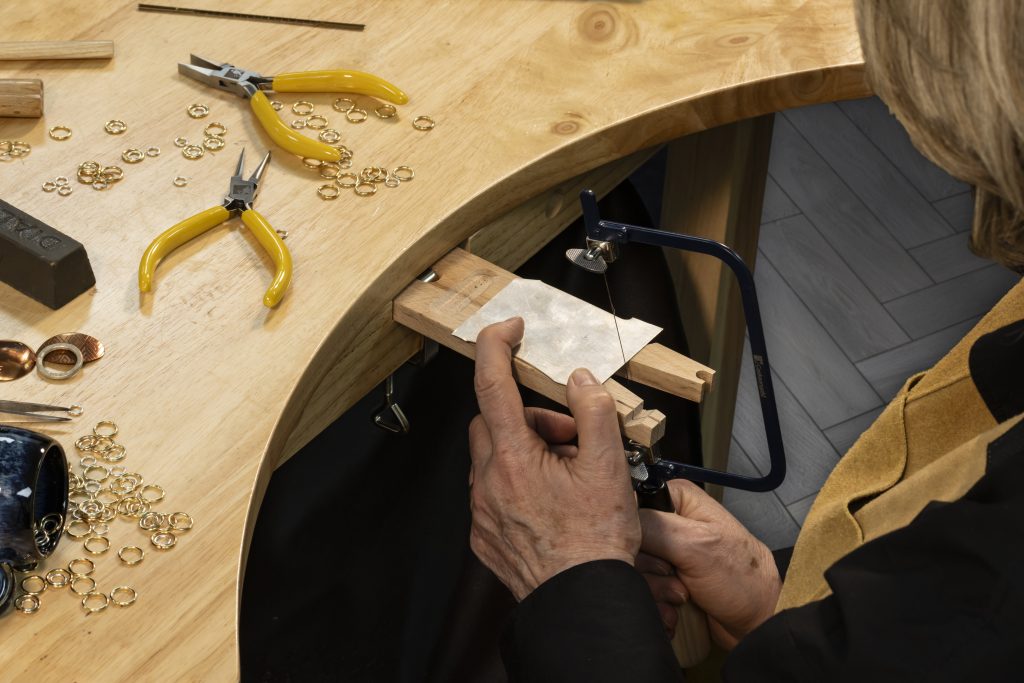
Saw piercing is the process of cutting metal using a jeweller’s saw frame fitted with a fine blade. The narrow blade allows intricate cutting that would be difficult to achieve with larger tools, making it an essential technique for jewellery makers.
Saw piercing is commonly used for:
- Cutting shapes from sheet metal
- Creating decorative cut-out patterns
- Making personalised jewellery and nameplates
- Removing excess material with accuracy
- Preparing components before filing and finishing
The level of detail you can achieve often depends on selecting the correct blade for the job.
Understanding Jeweller’s Saw Blade Sizes
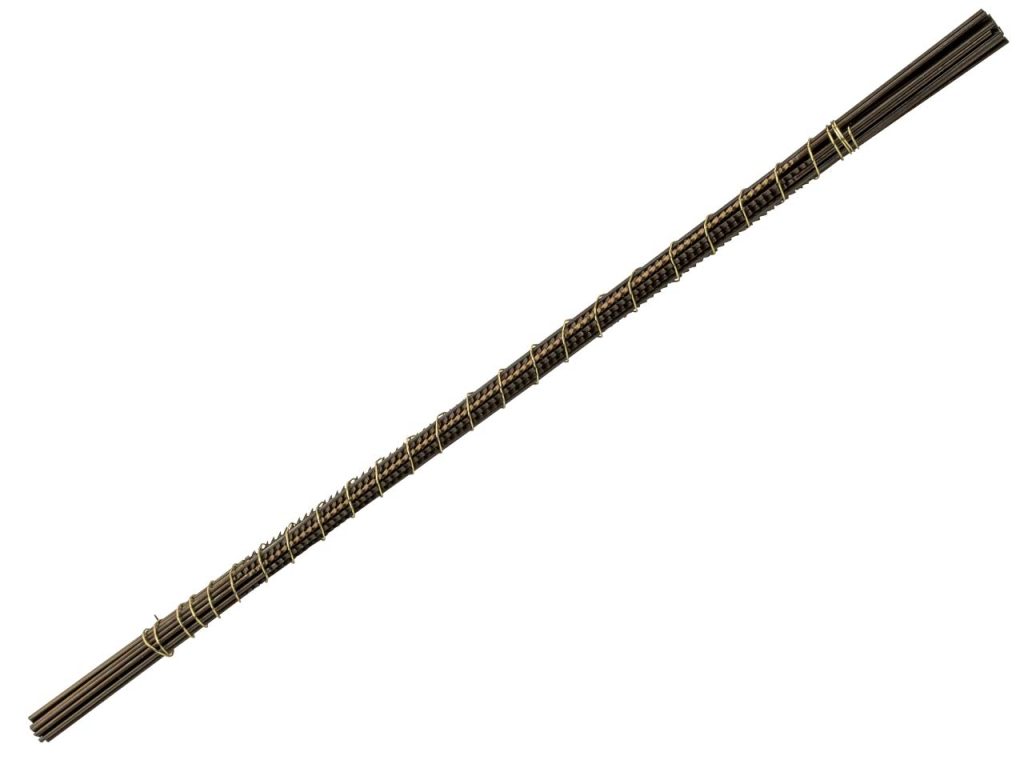
Jeweller’s saw blades are available in a range of sizes to suit different metal thicknesses and applications. Blade sizes are typically measured using a numbering system that ranges from very fine blades, such as 8/0, through to larger grades such as 3, 2, 1 and 0.
As the blade number increases, the blade becomes coarser and the teeth become larger. Finer blades have more teeth per inch and are designed for thinner materials and intricate work, while larger blades are more suitable for cutting thicker metals.
One of the most useful rules to remember when selecting a blade is that at least three teeth should be in contact with the metal at any one time. Using a blade that is too coarse can cause snagging and rough cuts, while a blade that is too fine may wear quickly or break more easily.
Choosing the Right Blade Size
Selecting the correct blade size is one of the simplest ways to improve your results. A blade that is too coarse can catch and snag, while a blade that is too fine may wear quickly or break more easily.
Our Bench Essentials Saw Blades are available in a range of sizes to suit different piercing applications and metal thicknesses.
| Metal Thickness | Recommended Saw Blade Size |
| Up to 0.5mm | 4/0 or 3/0 |
| 0.5mm – 0.8mm | 3/0 or 2/0 |
| 0.8mm – 1.2mm | 2/0 or 2 |
| 1.2mm – 2.0mm | 1 or 0 |
| Above 2.0mm | 0 |
These recommendations provide a useful starting point when selecting a blade. As your experience grows, you may find you prefer a slightly finer or coarser blade for certain applications.
Choosing a Saw Frame
While selecting the correct blade is important, the saw frame itself also contributes to cutting accuracy and control.
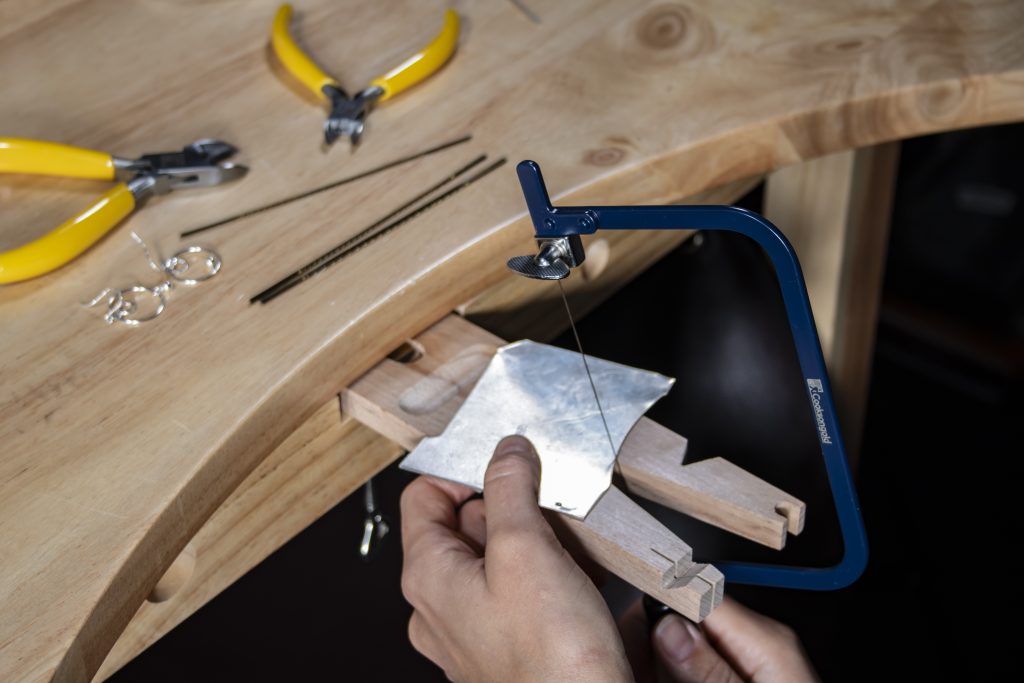
A good-quality frame helps maintain consistent blade tension, allowing the blade to cut smoothly and accurately. The Bench Essentials by Cooksongold Saw Frame has been designed to provide reliable performance for everyday jewellery making, helping maintain blade tension and improve stability while cutting.
Combined with the correct blade size, a reliable saw frame can help improve control and reduce unnecessary blade breakages.
Top Tips for Cleaner Cuts
- Let the Blade Do the Work – Applying excessive pressure is one of the most common causes of blade breakages. Use smooth, controlled strokes and allow the blade to cut naturally through the metal.
- Use Beeswax – Applying a small amount of beeswax or blade lubricant can reduce friction, improve cutting performance and help extend blade life.
- Turn the Metal – When cutting curves or intricate shapes, keep the saw moving vertically and rotate the metal underneath. This provides greater control and helps produce smoother cutting lines.
- Support Your Work Properly – A bench peg provides essential support while sawing. Proper support reduces vibration and helps improve accuracy.
- Practise Before Starting Detailed Work – Developing confidence with a jeweller’s saw takes practice. Spending time cutting simple shapes in copper or brass sheet can help improve control before moving on to precious metals.
Staying Safe While Sawing
Jeweller’s saw blades are extremely sharp and can easily catch fingers if proper care is not taken.
A few simple precautions can help reduce the risk of injury:
- Keep fingers positioned to either side of the cutting line, never directly in front of the blade.
- Ensure your metal is properly supported on a bench peg.
- Slow down as you complete a cut, as the blade can move forward suddenly when it breaks through the metal.
- Replace bent or damaged blades immediately.
- Work in a well-lit area so you can clearly see your cutting path.
Good bench habits contribute to both safer working and better results.
Selecting the correct blade size is the first step towards successful saw piercing. Combined with a properly tensioned saw frame and good cutting technique, the right blade can help you achieve cleaner cuts, reduce breakages and improve accuracy at the bench.
Harvey Wedgbury