
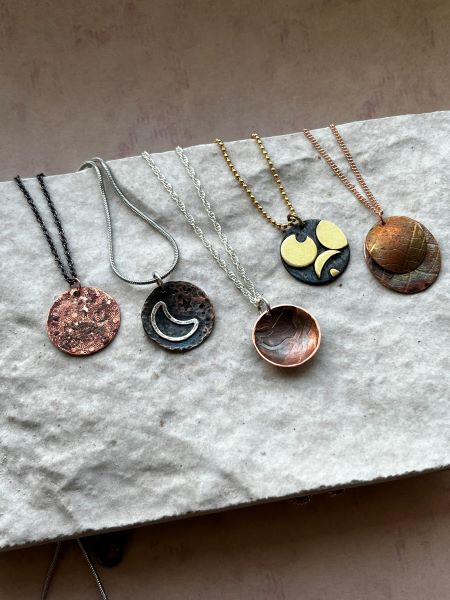
Looking for new ways to work with copper and brass? These metals are perfect for experimenting with contrast, texture and scale, making them ideal for trying out new designs.
Here are five techniques to explore in your next designs.
1. Layer Metals for Depth and Detail
Layering copper and brass is one of the simplest ways to introduce contrast and dimension into your designs. The natural colour difference between the two metals helps each element stand out, even with minimal shaping.
Start with simple, cut-out forms and build them up into more detailed compositions.
- Layer brass shapes over a copper base to highlight key areas
- Add spacing between layers to create more depth
- Introduce small silver accents to brighten the overall look
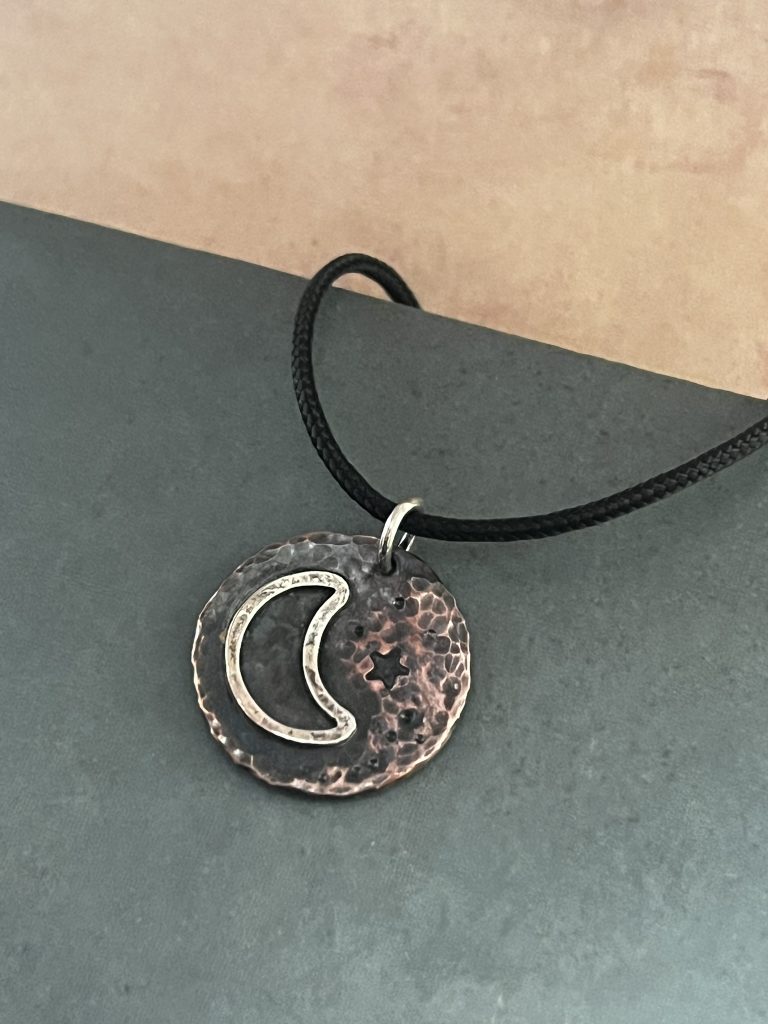
2. Using Texture
Texture can completely change the feel of a design. Copper and brass are both highly workable, making them ideal for experimenting with different surface finishes.
Even light texturing can catch the light differently and bring more movement into a design.
- Use a ball-pein hammer for softer, organic textures
- Stamp repeating patterns for a more structured finish
- Combine textured and smooth areas to create contrast
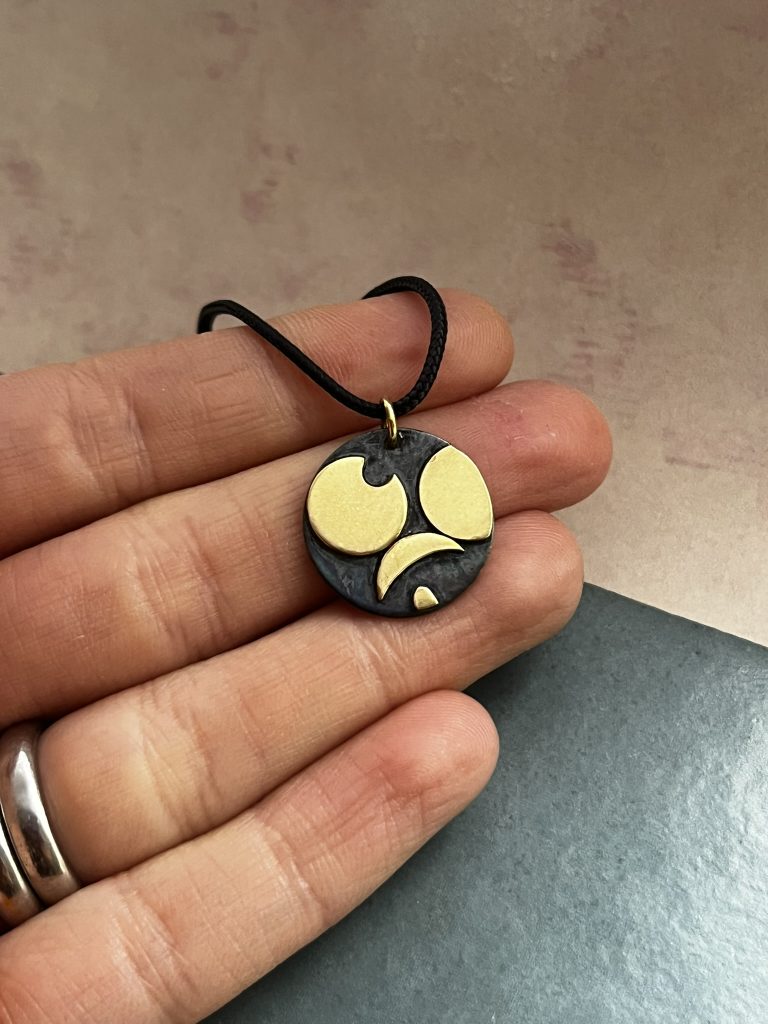
3. Contrast Polished and Oxidised Finishes
Finishing can be just as impactful as the design itslef. Oxidised copper paired with polished brass creates a strong visual contrast that feels clean and contemporary.
This approach works particularly well with simple shapes, where the finish becomes the main feature.
- Oxidise copper and polish back raised areas to reveal highlights
- Pair darkened copper with bright brass for a bold contrast
- Keep shapes minimal to let the finish stand out
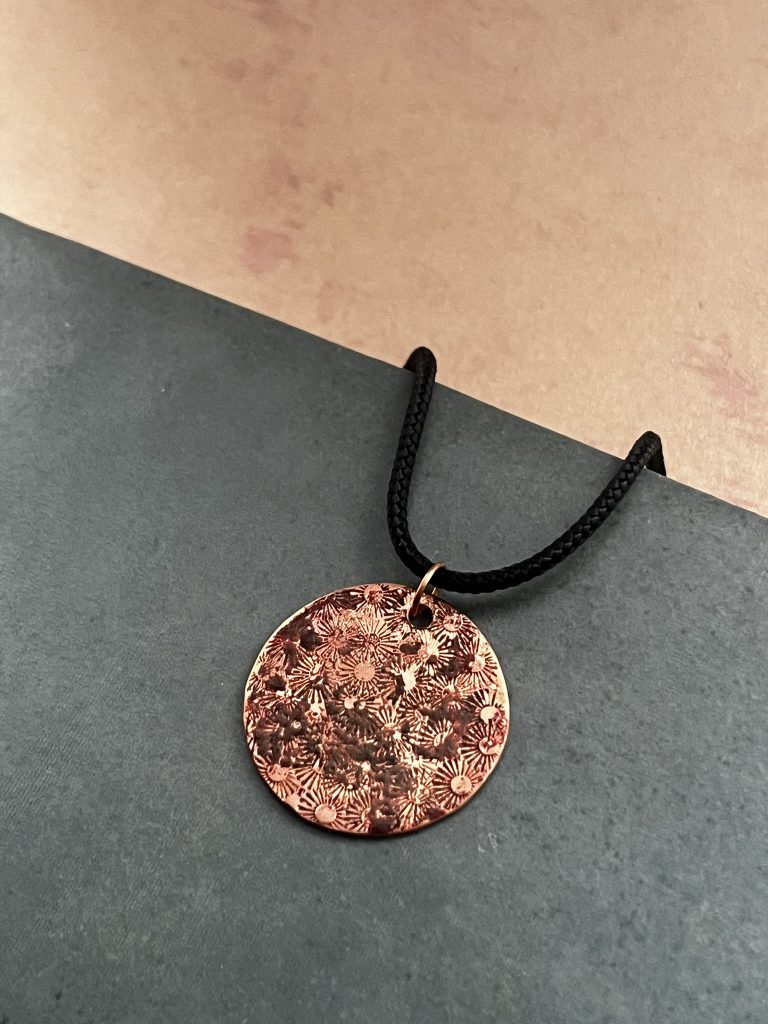
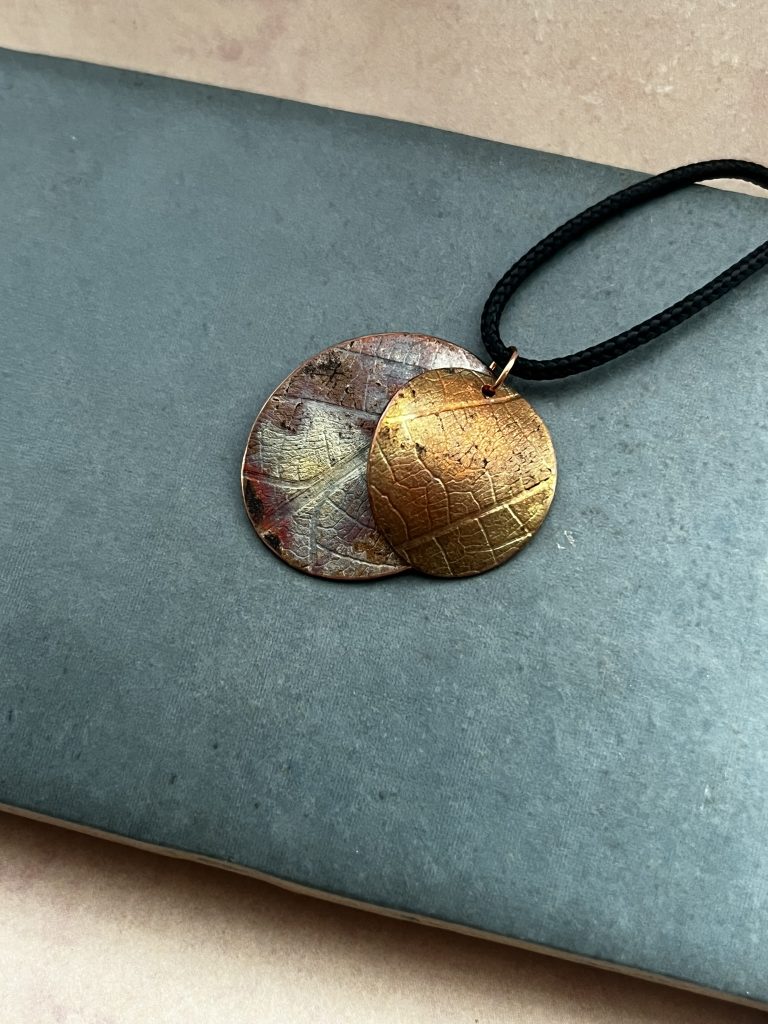
4. Capture Natural Textures
Copper and brass are ideal for picking up fine detail, making them perfect for nature-inspired designs.
Imprinting natural materials like leaves can produce intricate patterns that feel organic and individual.
- Use leaf skeletons in a rolling mill for detailed impressions
- Experiment with different natural surfaces to vary the result
- Keep forms simple to let the texture take focus
5. Add Pattern with Texture Plates
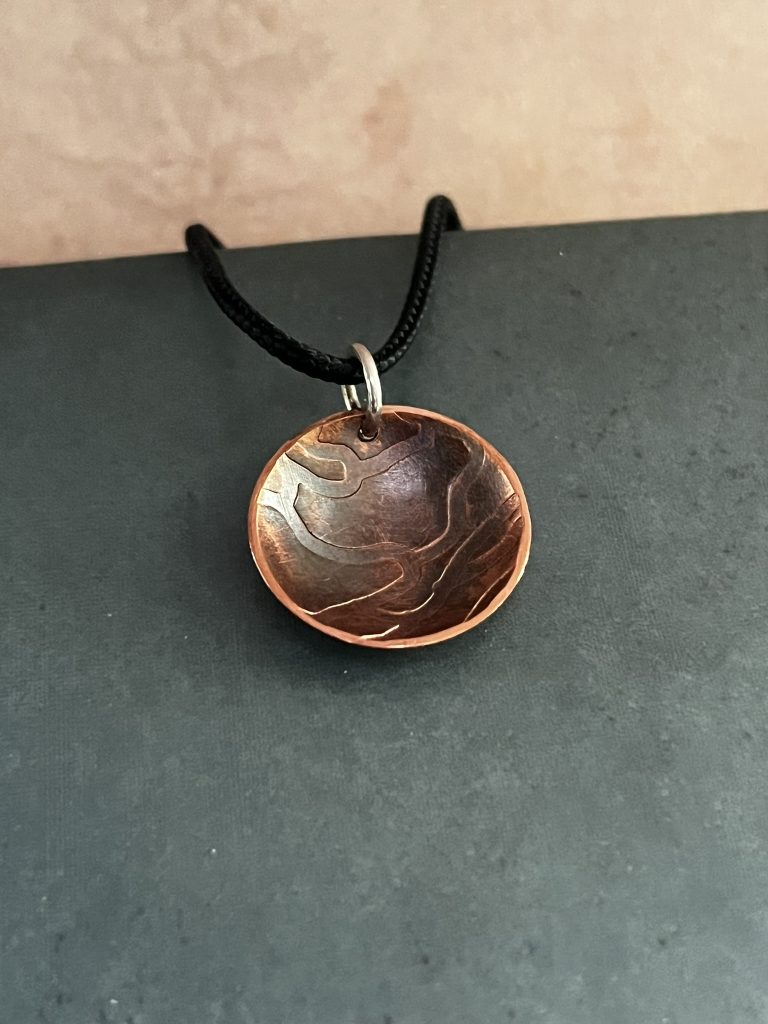
For more controlled and repeatable designs, texture plates offer a quick way to introduce detailed patterns.
They’re especially useful when you want consistency across multiple designs or a more decorative finish.
- Use geometric plates for a clean, modern look
- Try floral or ornate patterns for added detail
- Cut shapes after texturing to frame and reposition the design
Copper and brass are ideal for testing ideas, developing new styles, and adding variety to your designs. Their contrast, workability and affordability make them a strong choice when you want to experiment more freely.
Harvey Wedgbury