Posts Tagged ‘semi precious stones’

FREE POST – Easier than ever!!

Friday, September 24th, 2010

It is that great period again: FREE POST is here!! Within the UK*, for any order over £50* which you place in the next 10 days you will benefit from our Free Post!! When we say it’s easy, we mean you won’t even need any codes or vouchers: just select “freepost” as the delivery  method at checkout and enjoy the experience!!

In case this is not reason enough to order, we hope to entice you with some of our great offers:

  • Gemstone Extravaganza: 10% off selected stones. We have over 400 gems in a beautiful multitude of sizes and shapes – you’re sure to get your eyes on something!
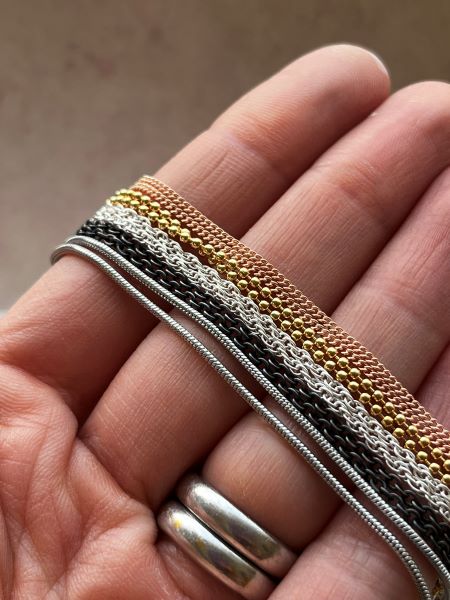
  • 25% OFF Top 20 Essentials: some of you are going back to school and some of you will only look to renew your tools, kits & accessories collection, in any case the bigger this is, the better! We have great prices on our Hand Torch, the Student Starter Kit, Starter Soldering Unit and Solder Block, PMC, Silver Chains and more!
  • Our NEW Reflections Collection:  our great NEW Silver alloy, which we think it might even inspire you for your new piece! In case you need help with it, our team is there to guide you so just try something new!
  • Moreover, there are new products in our Art Clay and Creative Metals at Cooksongold and always a great variety of over 11,000 jewellery making products. Just one stop and your jewellery will get the best treatment!! You’ll get fabulous prices and FREE POST!! Free Post ends on the 3rd of October at midnight, but don’t forget you can claim it more than once: make the most of it!! Click here to check out some of the products we thought you’ like!

We’d love to hear what you thought or what you bought so don’t forget to leave a comment!

Gemstones for Jewellery making

Friday, March 20th, 2009

If you’d like to make a general comment regarding this article or post a question to the Cookson team please click here

With the launch of our new range of gems, pearls and Semi Precious Stone Chips this month we thought we’d take a look at the process of selecting stones using colour.


The Earth yields up a rich variety of gemstones that can be used in jewellery making, with every hue and colour imaginable available to incorporate into stunning pieces that will compliment any outfit. The choice of which gemstone to include in a piece is purely down to the individual and is subject to all kinds of influences including birthdate, fashion or even superstition.

Click here to see our full range of gems

Click here to see our full range of gems

Birthstones are a good place to start. Each zodiac sign has a particular gemstone associated with it, and giving someone a piece of jewellery that incorporates that stone shows the recipient that much more thought has gone into the piece. The gemstones range from the lavish such as sapphires, emeralds and rubies, to the more subtle like moonstone and lapis lazuli. Because of the sheer range of gemstones available, you can spend as little or as much as you like and still have a beautiful piece of jewellery with a hidden meaning, which will be cherished by the recipient.


Breaking down gemstones by colour is also an alternative. If you like red but can’t afford to buy a high quality ruby, then you could look at cheaper alternatives such as garnets or spinel. Spinel can range in colour to a delicate pink through to a deep red and can look every bit as stunning as a ruby. Garnets offer a deeper shade of red with hints of violet and purple in them. They’re popular in eastern jewellery and can be used to produce exotic looking jewellery at a fraction of the cost of most rubies.


For blue stones, sapphires are the first choice, but even though these range in colour, quality and price, there are other alternatives. A particular favourite is the deep royal blue of lapis lazuli, which is often flecked with gold within the stone. This can produce a stunning effect with gold findings. Lapis can also be bought as beads as well as cabochons, meaning that the stone can be used in necklaces or as a setting for a ring, for example. Kunzite is another alternative that has a violet tint and is a relatively cheap alternative to precious gemstones such as sapphires.


Not strictly a gemstone but still valued highly in jewellery making, amber is a perennial favourite. Its warm, golden tone compliments silver findings perfectly and it has a honey-like lustre that is hard to resist. It can be a difficult gem to work with as it is very soft, but the results it produces are well worth the effort. Baltic amber is the most highly prized, but Middle Eastern amber can range in tone from a golden yellow to a deep red.


The most obvious green gemstone to go for is emerald, and surprisingly these can be far less expensive than you first think. Again, quality stones will cost more, but if you’re willing and capable of doing a little work to refine a lower quality stone the effects can still be beautiful. Peridot is a cheaper alternative and is a much paler green with a translucency that is extremely delicate and effective for use with small findings.


The opal carries a great deal of superstition with it, but is probably one of the most beautiful gemstones to work with. It ranges from a milky white to deep blue or even the rare ‘fire opal’, which is like a small firework captured in stone. Its ability to catch the light and produce a rainbow of colours is dazzling, and opal retains its popularity even today.


There are thousands of gemstones to choose from, and cooksongold.com carries  a full selection, ranging from emeralds and rubies right through to cheaper but no less beautiful alternatives. Don’t be afraid of including gemstones in your jewellery making – the results can be inspiring!

CLICK HERE TO MAKE A COMMENT, POST A COMMUNAL QUESTION OR ASK THE COOKSON TEAM A QUESTION

Applications of Silver Beads in Jewellery Making

Tuesday, February 10th, 2009

This week at Cookson our designers are looking into the applications of silver beads in jewellery making. Hope this is helpful. Feel free to make a comment.
Silver beads have been prized for centuries for their elegance and ability to compliment almost any other combination of decoration. But there is a clear difference between silver and sterling silver.


Click here for silver beads

Click here for beads

Beads are commonly made from Sterling silver which is a silver alloy made up of 7.5% copper, 92.5% silver.  Pure silver is designated as 99.9% pure, but this purity tends to make the metal very soft. In jewellery applications, this can mean that delicate work is easily damaged or broken through the slightest of knocks. Adding another base metal to the silver gives it greater durability and strength. Sterling silver has this additional alloy and is only 92.5% silver.


Silver beads are used in almost every type of jewellery, from simple necklaces to modern body jewellery. A silver necklace carries with it an air of sophistication and elegance, particularly if the silver beads are offset with other precious or semi-precious stones or pearls.

Necklaces are not the only use of silver beads in jewellery. Because of the huge range of designs available, they can be used in earrings, bracelets and cufflinks to match a simple but stylish necklace. Silver beads can also be incorporated into all kinds of applications, such as embroidering onto clothing or bags, eveningwear or shoes. Designers across the world continue to be captivated by the myriad of uses that silver beads have in fashion and couture, with the top design houses often including beading in their collections.

Semi-precious stones

Semi-precious stones

Silver has the advantage of being the ‘black’ of jewellery in fashion terms – it goes with practically anything. A delicate, silver bead necklace can casually compliment a simple outfit of jeans and tee shirt. That same necklace can be worn with a cocktail dress with equal flair and finesse. A handful of silver beads, a well-thought out design and a little bit of patience can produce something that is unique and timeless. The best way to begin to incorporate silver beads into your jewellery making is to buy a small selection and let your imagination loose. The results will be uniquely yours and always a favourite part of your jewellery collection, no matter what the occasion


Adding some razzle to your dazzle – incorporating gemstones in jewellery making

Tuesday, January 20th, 2009

In this weeks article our jewellery experts have been taking a look into the role of gemstones in jewellery making as well as providing some great tips for how to use them in a bid to make your pieces both unique and stylish. Please feel free to post a comment or ask one of our experts a question.

Jewellery making is an art form, and the incorporation of gemstones into jewellery goes back thousands of years. But gemstones don’t necessarily mean top end diamonds or rubies – there are a whole range of semi precious gemstones that can be used by jewellery makers for very little initial cost.

Add some razzle to your dazzle!

Add some razzle to your dazzle!

Suppliers of gemstones recognise that their products can be used in any form of jewellery, from rings to broaches, necklaces to earrings. The possibilities are only limited by the creator’s imagination. There are so many shapes and sizes to choose from, it may be a little daunting at first glance, but if you plan your piece of jewellery carefully, there is bound to be a gemstone to fit.

The first thing to do is to decide exactly what kind of piece you want to create. Once you have decided on that, you can then narrow your field of choice down regarding shape and size. If you are making a broach with a gemstone in a setting, a cabochon of any precious or semi-precious gemstone can easily be fitted into a corresponding blank mounting. A popular combination is silver and turquoise, giving a beautiful finish for a budget price.

Most silver and gold findings can be bought from jewellery suppliers. Good suppliers will also carry a range of gemstones that are designed to fit their selection of mountings. To use gemstones in your jewellery making, you need only a few simple tools and a lot of imagination. If you’re really serious about gemstones, talk to your gemstone dealer about special cuts and minerals. If you are intending to produce a quantity of gemstone jewellery, the initial outlay of equipment will soon pay dividends, as the uncut gemstones are far cheaper than the cut ones.

Semi-precious gemstones can also be bought as beads, combined with delicate silver spacers and created into beautiful, elegant jewellery.

Creating stylish and unique jewellery is far easier than you think. By incorporating gemstones into your designs, you can even make birthstone-specific jewellery for a particularly individual gift. Each zodiac sign has corresponding gemstones, most of which are relatively common and fairly cheap. Even the more expensive stones, such as emeralds and sapphires, can be cheaper than you expected, especially if you choose a stone that is perhaps of a lower quality, but has its own raw beauty. The important thing to remember when venturing into the world of gemstones is to research before you buy new stones, as each stone has its own unique properties.

Gemstones never go out of fashion, so take a look around jewellery fairs to pick up inspiration and ideas for your own work, and in no time you’ll be adding your own, unique gemstone designs into your jewellery making.

Add some razzle to your dazzle!

Add some razzle to your dazzle!