Archive for April, 2009

Starting & furnishing a jewellers workshop

Monday, April 27th, 2009


If you’d like to make a comment about this article, or post a question please click here

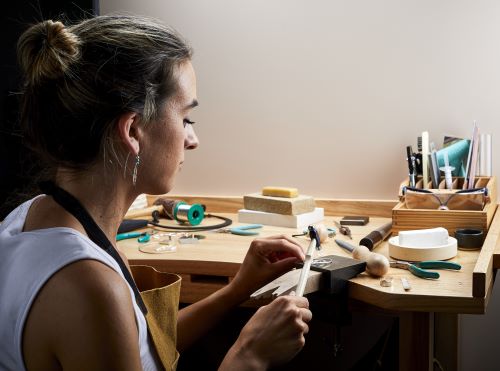
Making jewellery doesn’t require a large space or big pieces of equipment or even furniture. A selection of key workshop pieces combined with basic hand tools provides everything for the first workshop. Cooksongold.com provides a full range of jewellery tools - everything from basic hand tools, pre-packed tool kits, consumables, larger machinery right through to the professional jewellers bench.

Your first workshop
Often the beginner or student will start making jewellery on ‘normal’ desk, worktop or even kitchen table!  Adapting the table can be easily be achieved by clamping a G clamp bench vice or anvil.  The jewellers peg/pin can then be held in place securely giving a simple, yet sturdy place to work.

Work Bench

Work Benches - Click here

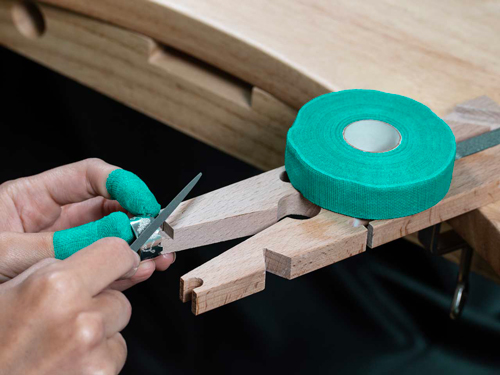
The peg is perhaps the most vital part of any setup allowing the jeweller to work quickly and efficiently. This wedge or triangle of wood supports the piece, holding it in a notch or v shape insert. This holds the piece rigid, allowing the jeweller to saw, cut, & file. 


If adapting an existing desk, the desk should be elevated, so that the working area is at mid chest level when the jeweller is sat upright, thus allowing maximum control of your tools and metals.


Let there be light and ventilation

Although normal desks can be adapted, two factors must be in place when setting up your ‘bench’ – light and ventilation. The work area needs to well ventilated to ensure a safe working environment combined with good bright and direct lighting. Natural light can be complemented by adjustable lamps ensuring that no shadow falls over your piece from the jeweller or the equipment.

Workshop lighting

Workshop lighting - Click here

The professional jeweller’s bench

The traditional jeweller’s bench is a purposed designed and provides the perfect working area for any project. Often mistakenly seen as expensive luxury, a good bench will last you a lifetime and most importantly will help in improving your technique. Benches are higher than a normal desk (mid chest level if the jeweller is sitting uptight) ensuring that the jeweller does not stoop to work. Most benches have the semi circle cut out ensuring that you can sit close to the to the work, and with the aid of a bench skin collects scrap and protect the jeweller from hot or sharp objects.


Organising jewellery tools  

Keeping a workshop tidy, and the tools organised will help the jeweller when working, creating an efficient working environment. Both tools & materials should ideally be kept close to the bench, with the aim of trying to keep all materials within arms reach. Practically many of the basic jewellers tools will be actually left on the bench – Pliers, files, cutters, tweezers are used so often that they can be left on the work top for immediate access. 


As a large part of jewellery making involves heat often a section of the bench will be dedicated to the equipment needed for soldering. Often the soldering area will be based around the placement of a torch, with the soldering block placed alongside a borax cone and dish.


For other materials such as jewellery findings, settings, and metal, storage containers should be used. These ideally have sliding draws to allow you to split different carats, sizes or types of findings.

Storage

Storage - Click here


Once the workshop is established all that remains to be added is the essential basic selection of popular jewellery tools such as files, saw & saw blades, emery & polishing sticks, pliers, cutters, verneirs along with forming tools and heating/soldering equipment.

CLICK HERE TO MAKE A COMMENT, POST A COMMUNAL QUESTION OR ASK THE COOKSON TEAM A QUESTION

Creative Freedom with NEW Art Clay Silver 650

Thursday, April 16th, 2009

If you’d like to make a comment about this article, or post a question please click here


We’ve all been fans of silver clay since we launched our range of Precious Metal Clay (PMC) last year, but since this launch we’ve been inundated for requests for Art Clay.
We’re now pleased to say that Cooksongold is stocking both Art Clay Silver 650, alongside Precious Metal Clay (PMC).


So what is ART CLAY? Art Clay is a precious metal clay which looks and feels like ordinary sculpting or porcelain clay with fine particles of pure silver mixed with a
non-toxic organic binder. The binder burns out during firing, leaving a pure silver item. It is an amazing material which gives the artist the freedom to create an object in clay, which when fired results in a pure, fine silver piece. The skill set required is more that of a model maker/sculptor/designer than those normally associated with a professional jeweller.


This Art Clay is known as Silver 650, simply because it can be fired at 650°C.
In fact at this low temperature it can be fired with sterling silver, dichroic glass and natural stones. This 650 version of Art Clay is slightly brighter than other clays. It shrinks by around 8% to 9%. Fire at 650°C for 30 minutes or 780°C for five minutes. Only use the higher temperature if the piece does not include sterling silver or glass. The object must be dry before firing.


Our Art Clay range includes :

Art Clay – the main product used for creating your piece.

Art Clay Slow Dry Clay – ideal for intricate modelling,

 Art Clay Paste – for gluing parts together and repair work & for texturing

 Art Clay Syringe – used for fine decoration

 Art Clay Paper – great for folding or embellishment

 Silver Oil Paste – used after firing to repair cracks or glue fired pieces together


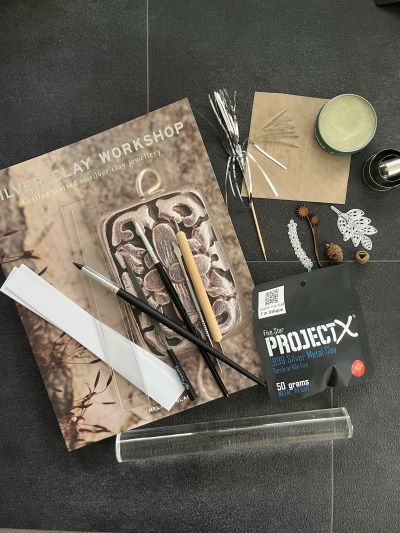
If you are new to Art Clay why not take a look at our Art Clay Starter kit which includes clay, DVD and a 12 page instruction book plus a selection of essential tools all for only £36.95!

CLICK HERE TO MAKE A COMMENT, POST A COMMUNAL QUESTION OR ASK THE COOKSON TEAM A QUESTION

Art Clay Starter Kit, click here

Art Clay Starter Kit, click here

FREEPOST this Easter Bank Holiday

Thursday, April 9th, 2009

If you’d like to make a comment about this article, or post a question please click here

Cooksongold.com is offering FREE delivery on ALL orders over £50 from Thursday 9th April to Monday 13th April Midnight!

Enter e-voucher ACP23 as you check out to claim FREEPOST*

FREEPOST

FREEPOST

Got a question?  Why not post a comment. Click here

Essential Guide to Pliers

Thursday, April 2nd, 2009

If you’d like to make a comment about this article, or post a question please click here

Whether you are just starting out in the trade or are seasoned jeweller your bench pliers will always be close at hand.  There is now an almost bewildering range of pliers available, all with their own character, and use.  With all these types available, we thought it would be worth  reviewing the most popular types – particularly as this month we have 10% off our best selling pliers !


Round Nose Pliers

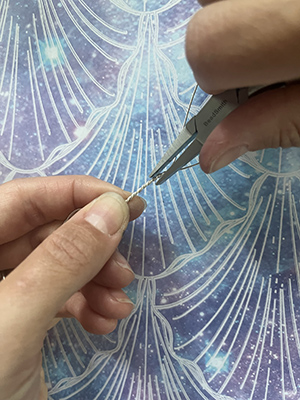
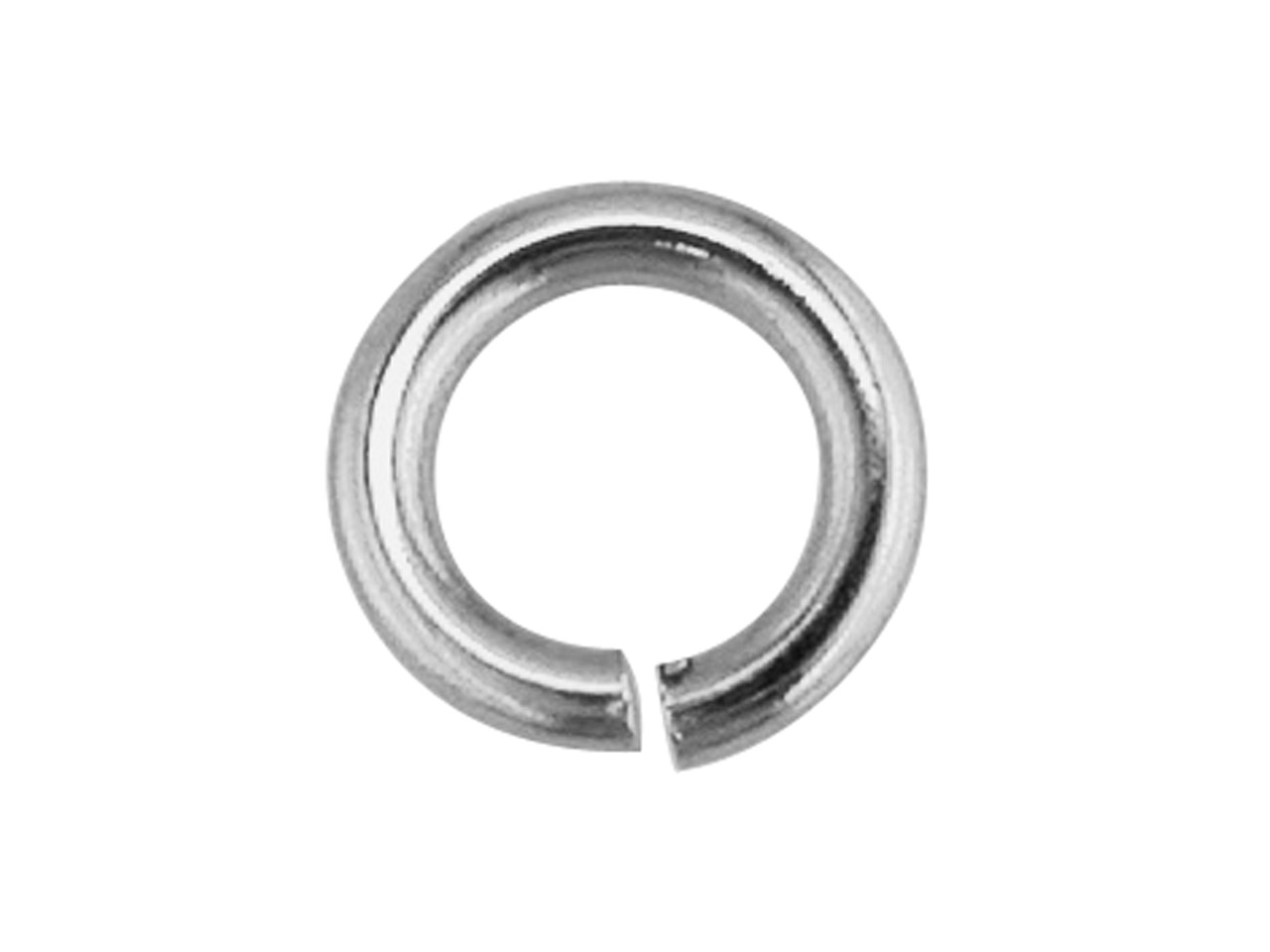
Round nose pliers have round tapered jaws and are ideal for shaping wire into loops curves and bends, and are probably most often used for making circles or jump rings.   

Round Nose Pliers - 10% off!

Round Nose Pliers - 10% off!

Half Round or Ring Pliers

Half round pliers are commonly used for working with rings, bending wire/sheet into a circle without leaving marks.  The flat jaw enables the jeweller to hold the outside of the curve whilst the D shape jaw is used to form the curve on the inside. 

Half Round Pliers - 10% off!

Half Round Pliers - 10% off!

Snipe Nose or Chain Nose Pliers

Snipe or Chain nose pliers are ideal for those detailed jobs.  The flat tapered jaws means they are perfect for manoeuvring pieces into place, attaching jump rings, and fine wire work.  For those who are keen beaders snipe nose pliers can also be used for closing crimps and attaching bead caps.  In addition Snipe Nose pliers are  ideal for making angled bends.

Snipe Nose Pliers

Snipe Nose Pliers - 10% off!

Flat Nose Pliers
Flat nosed pliers are available in a range of sizes and are used to bend sharp corners in wire and sheet, plus are ideal for holding items flat, straightening wire and can be used to open and close jump rings.

Crimping Pliers

Crimping pliers are designed specifically for securing crimp beads. Some jewellers will simply use a pair of snipe or flat-nosed pliers to flatten & close the bead.  However crimping pliers make this job easier and give a more professional, smooth and unobtrusive finish.


Side Cutters / Top Cutters

Side cutters & top cutters are used for cutting wire and sheet in restricted areas. 


Split Ring Pliers

These pliers are used to open split rings easily and quickly.  Simply place the bent nose in the centre of the ring and add pressure. The split ring will then easily slide apart.


Parallel-Action Pliers

The unique box joint on the pliers keep the jaws parallel as they open and close. Parallel pliers are ideal for all forming work e.g. straightening sheet and thick wire.  Choose parallel-action pliers when you need to hold an object securely whilst applying pressure.

 Parallel Action Pliers


Savings on our best selling pliers at cooksongold.com

Our range of red handled pliers offer good quality at a great price and many types are  now discount  - click here to view our latest low prices.


Got a question about pliers, or have you got your own favourite not covered here ?  Why not post a comment.  Click here